

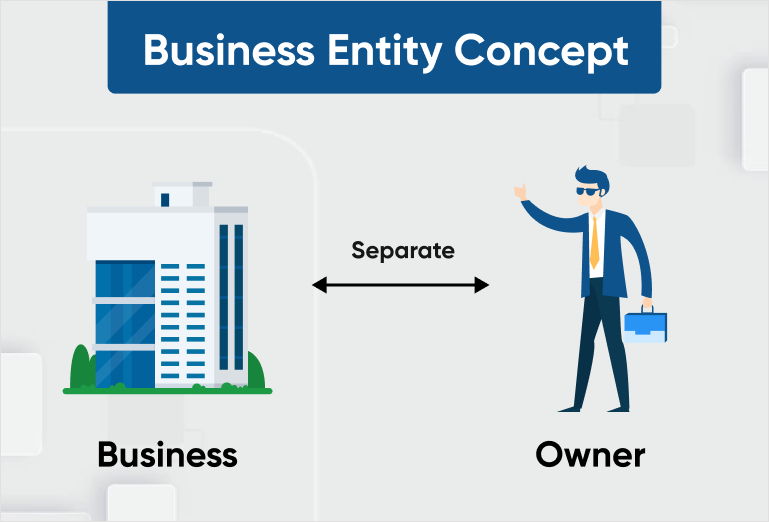
Understanding business entity meaning matters because the type of business entity you choose is not just a paperwork formality. It shapes your tax bill, your personal exposure if the business gets sued, how easy it is to bring on investors, and what happens to the business when you want to exit.
Most new business owners pick one without fully understanding what they have chosen – and it costs them later. This guide explains each type plainly, compares them side by side, and gives you a simple framework to decide which one fits your situation.
Why Entity Type Matters More Than Most New Owners Realise
Imagine you run a consulting business as a sole proprietor. A client claims your advice caused them financial harm and sues for 00,000. As a sole proprietor, there is no legal wall between the business and you – your savings, car, and home are all potentially exposed.
The same business structured as an LLC creates a legal separation. The lawsuit targets the LLC, not you personally. That one structural decision, often costing 00-00 to set up, can protect everything you have built outside the business.
Main Types of Business Entities – Full Comparison
| Entity Type | Personal Liability | How It’s Taxed | Complexity | Best For |
|---|---|---|---|---|
| Sole Proprietorship | Unlimited – owner is personally liable | Pass-through (personal tax return) | Very simple – no registration needed | Freelancers, side businesses, low-risk services |
| General Partnership | Unlimited for all partners | Pass-through to each partner | Simple – partnership agreement recommended | Two or more people, informal businesses |
| LLC | Limited – personal assets protected | Flexible (default pass-through, can elect S-Corp) | Moderate – state registration required | Most small businesses – best balance of protection and simplicity |
| S-Corporation | Limited | Pass-through, saves on self-employment tax | Higher – payroll, officer salary required | Profitable small businesses wanting tax savings |
| C-Corporation | Limited | Double taxation (corporate + dividend) | High – board, bylaws, annual meetings | Startups seeking investors or planning IPO |
| Nonprofit (501c3) | Limited | Exempt from federal income tax | High – IRS approval required | Charitable, educational, religious organizations |
LLC vs. Sole Proprietor – The Most Common Decision
| Sole Proprietor | LLC | |
|---|---|---|
| Setup cost | Free – no registration required | 0-00 depending on state |
| Personal liability | No protection – you are the business | Personal assets protected from business debts and lawsuits |
| Tax filing | Schedule C on personal return | Schedule C (default) or can elect S-Corp treatment |
| Credibility | Some clients prefer dealing with an LLC | Seen as more established and professional |
| Bank accounts | Can use personal account (not recommended) | Requires separate business account |
| Best if… | Very low risk, testing a new idea, under 0K/year | Any ongoing business with clients, contracts, or real income |
3 Questions to Help You Choose
1. Could my business get sued? If there is any realistic chance of a client or customer claiming harm – physical, financial, or otherwise – you want liability protection. That means LLC or corporation, not sole proprietor.
2. How much will I earn? Under 0,000 net profit, a simple LLC taxed as a pass-through is usually fine. Above 0,000-0,000, talk to a CPA about electing S-Corp treatment – it can meaningfully reduce self-employment tax.
3. Will I have investors or partners? Bringing in investors almost always requires a corporation, usually a C-Corp. Multiple owners can use an LLC or partnership, but formalise it with an operating agreement.
Can You Change Your Business Entity Later?
Yes – and it is more common than you would think. Many businesses start as sole proprietors, grow, and convert to LLCs once they are generating real revenue. Converting from an LLC to an S-Corp or C-Corp is also possible and often done for tax reasons.
That said, conversions are not always seamless. They can trigger tax events, require new bank accounts and EINs, and need updated contracts with clients. It is easier to start with the right structure than to fix it later.
Common Mistakes When Choosing a Business Entity
Choosing sole proprietor because it is free – without realising the unlimited liability exposure.
Forming an LLC but never separating personal and business finances – which can pierce the liability protection, known as piercing the corporate veil.
Setting up a C-Corp when an LLC would have been simpler and cheaper for a small business with no external investors.
Not consulting a CPA before choosing – the tax implications alone can make the difference worth a one-hour consultation.
